PMA Webtool Prototype
The Project Management Agreement (PMA) is a pre-construction coordination document used in Military Construction programs to align stakeholders and capture project decisions. Historically, completing one required in-person facilitation, which limited access for distributed teams and made consistency difficult to maintain. With potential Department of Defense-wide adoption, the process needed to become more scalable, accessible, and reliable.
The Opportunity
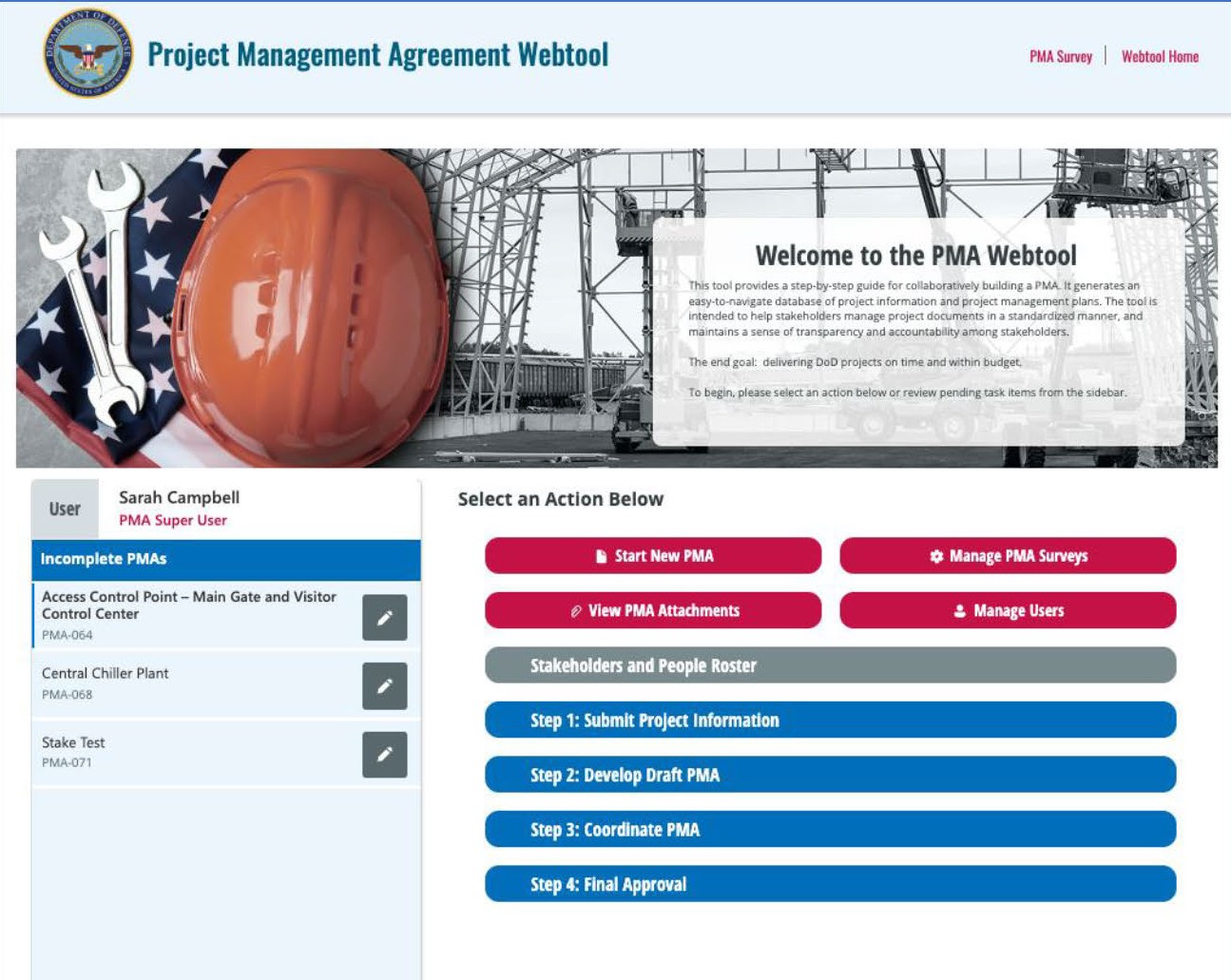
The goal was to digitize the PMA process without losing the collaboration and decision-making structure that made it valuable. Using feedback from multi-functional teams, I designed and built a prototype that guided stakeholders through PMA development step by step, gave them a shared place to contribute information, and created standardized documentation at the end of the process.
The Solution
The PMA Webtool combined Power Pages, Power Apps, Dataverse, Power Automate, and Word templates into a secure, role-based collaboration experience.
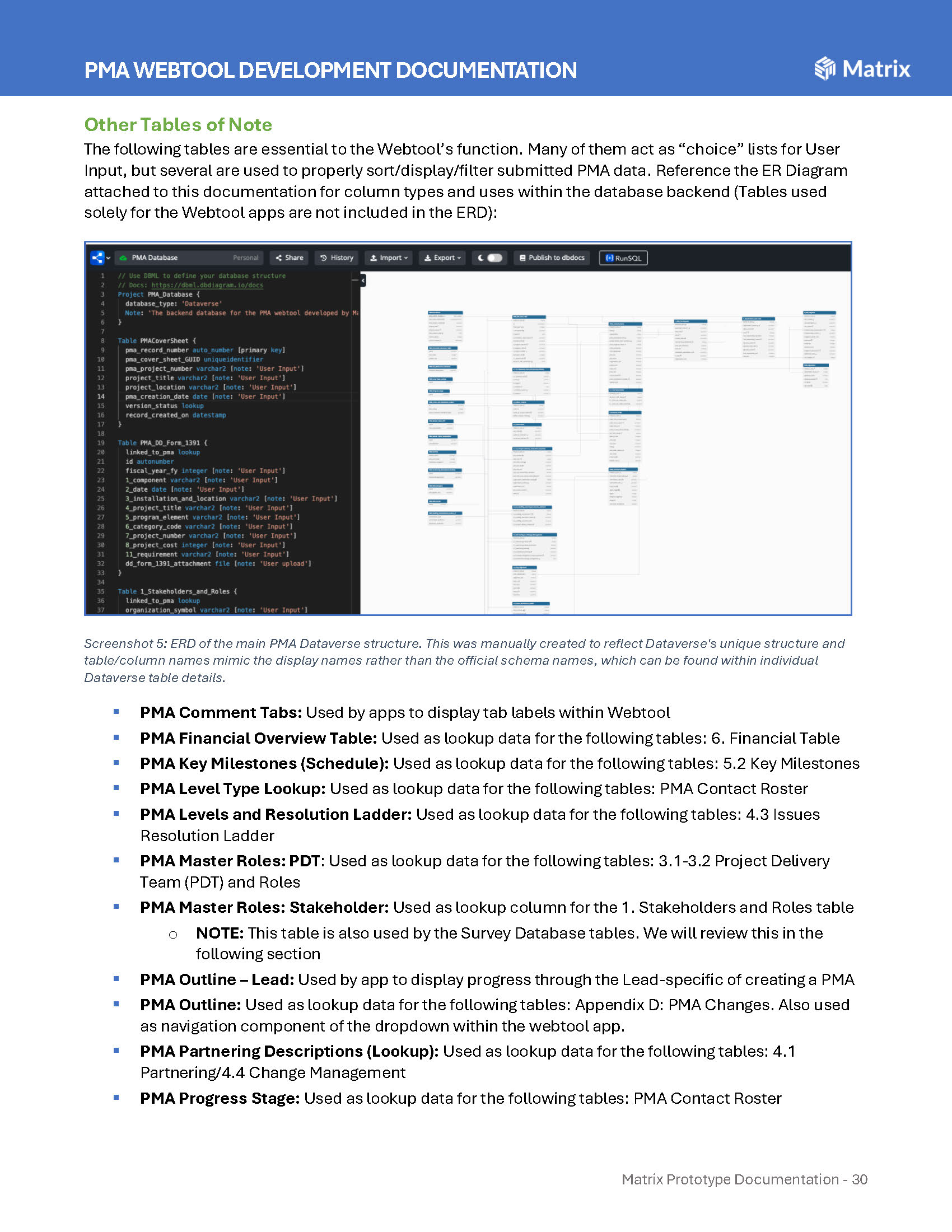
Power Pages enabled access for external, non-tenant users, while Power Apps provided a guided interface for completing the PMA. Dataverse served as the structured data backbone, supporting relational project information and a more sustainable alternative to manual documents and disconnected inputs.
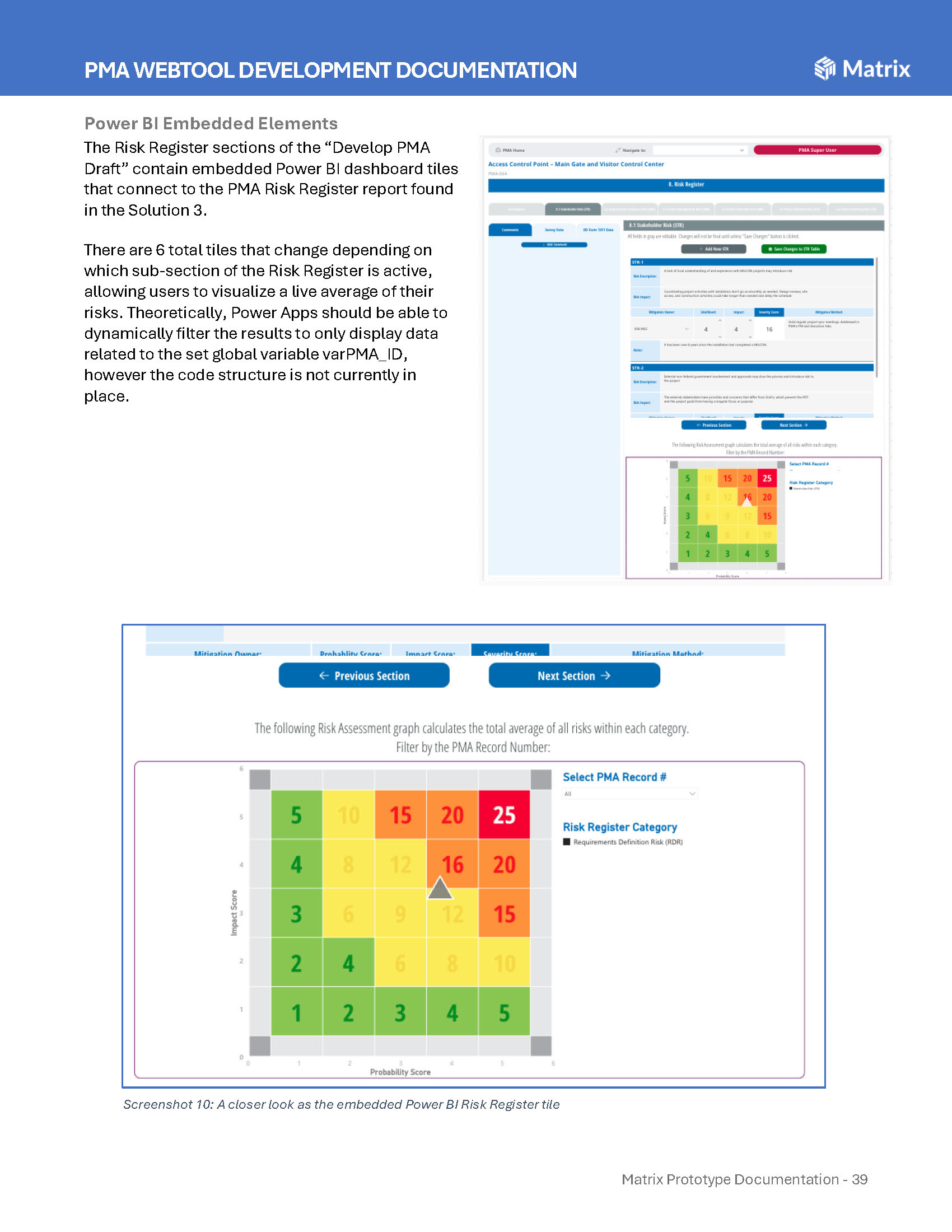
The platform supported step-by-step PMA creation, collaborative data entry, standardized documentation generation, and automated export through Power Automate and Word templates. An optional Power BI reporting layer provided clear visibility into PMA status and project progress.
Designing for Scale and Consistency
The system was designed around a few practical decisions.
Structured data over document-only workflows
Using Dataverse allowed the PMA process to capture related information in a structured format rather than treating each agreement as a standalone document. This created a stronger foundation for consistency, reporting, reuse, and future expansion.
Guided interaction over facilitator dependency
The user experience translated a complex, in-person process into manageable steps. This made the workflow easier to navigate independently while preserving a clear path for stakeholder input and project coordination.
Secure access for distributed users
Power Pages was used to make the experience available to non-tenant stakeholders without compromising the need for controlled access. This was essential for a process involving multiple parties across the Department of Defense environment.
Automation where it reduced repetitive work
Power Automate and Word templates streamlined document creation and export, helping convert entered information into standardized PMA documentation without relying on manual assembly.
Testing and Iteration
Stakeholder feedback shaped the prototype throughout development. Process mapping, requirements conversations, testing, and validation helped ensure the application reflected the real coordination needs of teams completing PMAs. The prototype also documented its own system logic and process flows, creating a clearer foundation for further development and a potential OSD rollout.
Result
The PMA Webtool Prototype established a scalable digital framework for PMA execution. It transformed a manual, location-dependent workflow into a centralized collaboration platform that could improve consistency, transparency, accessibility, and adoption across Military Construction stakeholders.